Let me be blunt with you: every time a fraudster games the streaming system, a real artist loses money they worked their entire life to earn. In early 2026, the music industry received a landmark moment of accountability when a US man was sentenced to 18 months in federal prison for orchestrating an $8 million AI music streaming fraud — a scheme so calculated and brazen that it has forced every major platform, every distributor, and every independent artist to sit up and ask the uncomfortable question: how long has this actually been happening, and how deep does it go?
What Actually Happened: Breaking Down the $8 Million Fraud Scheme
According to reports, the convicted individual used artificial intelligence tools to mass-generate thousands of fake tracks — music created not by human artists pouring their soul into a craft, but by algorithms spitting out audio content designed specifically to exploit streaming royalty payout systems. These AI-generated songs were then uploaded to major digital streaming platforms under fictitious artist names, accompanied by an elaborate bot network that artificially inflated stream counts into the millions.
The result? Approximately $8 million in fraudulent royalty payouts siphoned away from the collective royalty pool — a pool that every legitimate artist, from Spotify-charting indie bands to bedroom producers uploading their first EP on DistroKid, draws from every single month. This was not a victimless crime. This was theft. And the victims were the artists, songwriters, and rights holders who play by the rules and still barely scrape together a living wage from streaming income.
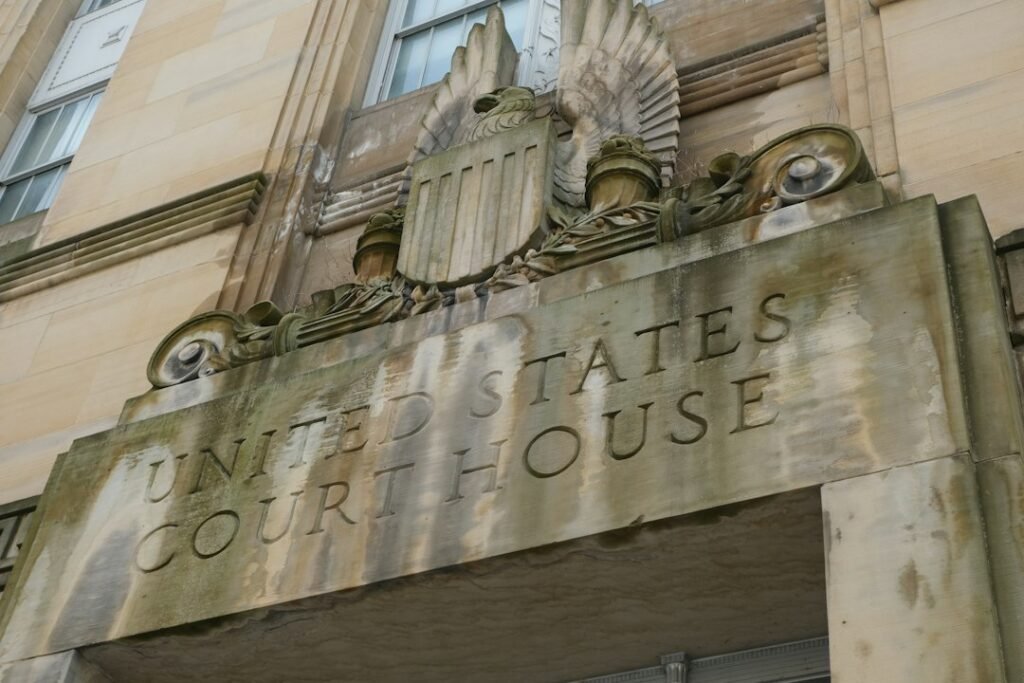
The 18-month prison sentence handed down marks one of the most significant criminal prosecutions related to streaming fraud in US history, and it sends a message that regulators and platforms have been too slow to send for years: this behavior is a federal offense, and it will be treated as one.
The Mechanics of AI-Generated Streaming Fraud
To understand why this case matters so deeply, you need to understand how streaming royalties actually work. Platforms like Spotify, Apple Music, Amazon Music, and Tidal operate on what is commonly called a pro-rata royalty model. In simple terms, the total revenue generated in a given month is divided proportionally based on how many streams each track receives relative to the total streams across the entire platform. If someone artificially inflates their stream count by hundreds of millions of fake plays, they are not just stealing from the platform — they are diluting the royalty pool that every other artist on that platform depends on.
In this case, AI tools were weaponized to do the heavy lifting. Generative audio platforms, the kind that can produce passable background music in seconds, were exploited to create bulk content at a scale no human artist could match. Combine that with bot farms mimicking listener behavior — complete with realistic play durations, skip patterns, and account activity designed to evade fraud detection algorithms — and you have a sophisticated criminal enterprise wearing the disguise of a music catalog.
The Real Victims: Independent Artists Absorbing the Damage
I’ve spent years covering the music business from the inside, talking to independent artists who are trying to build sustainable careers in one of the most competitive and financially punishing industries on the planet. When I tell you that streaming royalty fraud hits indie artists the hardest, I am not being dramatic — I am being precise.
Consider this: the average per-stream payout on Spotify hovers somewhere between $0.003 and $0.005. An independent artist needs roughly 250,000 streams just to earn around $1,000. These are not abstractions — these are the economic realities that artists using platforms like TuneCore, CD Baby, DistroKid, and Amuse are navigating every single month. When fraudsters inject hundreds of millions of artificial streams into that ecosystem, they are directly reducing the per-stream rate that legitimate artists receive. The math is brutal and the injustice is real.
And it goes beyond just the money. Fraudulent streams distort editorial playlist algorithms. They skew chart rankings. They corrupt the data that labels, booking agents, and brand partners use to assess an artist’s genuine audience and commercial viability. When fake artists ghost-produced by AI are racking up millions of plays, real artists with real fanbases get buried in recommendation engines that have been fed poisoned data.

Platform Accountability: Are Spotify, Apple Music, and Others Doing Enough?
The streaming platforms themselves bear significant responsibility here, and it is long past time we said it plainly. Spotify has had a streaming fraud detection system in place for years, and in 2024 they took the controversial step of removing tracks from catalogs that failed to meet minimum stream thresholds — a move many argued targeted small legitimate artists more than bad actors. Apple Music and Amazon Music have their own internal fraud detection systems, but the specifics of how they work remain largely opaque to the artist community.
The reality is that the pro-rata royalty model itself creates a structural incentive for fraud. As long as gaming stream counts translates directly into gaming royalty payouts, sophisticated criminals will find ways to exploit it. Some industry advocates, including groups like the Music Artists Coalition and the Human Artistry Campaign, have pushed for alternative royalty models — particularly a user-centric payment system, where each subscriber’s monthly fee is distributed only among the artists that specific user actually listened to. Countries like Norway and France have already adopted user-centric models for some platforms, and the results have been more equitable distribution that is inherently more resistant to large-scale streaming fraud.
What This Conviction Means for the Future of Music Industry Integrity
The 18-month sentence is significant not just as a punishment but as a precedent. Federal prosecutors have now demonstrated that streaming fraud — particularly when it involves AI-generated content and bot manipulation at scale — can and will be prosecuted as wire fraud and money laundering. That is a powerful deterrent, and it establishes legal infrastructure that future cases can build on.
But a single conviction is not a solution. The music industry needs structural reform, and it needs it now. Here is what I believe needs to happen immediately. First, streaming platforms must dramatically increase transparency around their fraud detection methodologies and publish regular reports on fraudulent activity identified and royalties recovered. Artists deserve to know the scale of the problem affecting their income. Second, digital distributors — DistroKid, TuneCore, CD Baby, and their competitors — need to implement more rigorous identity verification and content authenticity checks before a track goes live on a major platform. The barrier to uploading AI-generated bulk content should be significantly higher than it currently is.
Third, the Recording Industry Association of America (RIAA), which played a key role in bringing this case to federal authorities, should push for dedicated federal resources — including a specialized streaming fraud task force — to investigate and prosecute these schemes before they scale to $8 million in damages. Fourth, and most critically, the industry needs to have an honest and urgent conversation about the role of AI-generated music itself in the streaming ecosystem. I want to be clear: AI as a creative tool used by human artists is a legitimate and evolving part of the music landscape. But AI as a factory for generating anonymous, soulless content bulk-uploaded purely for royalty farming is a parasitic practice that needs to be explicitly prohibited by platform terms of service and enforced aggressively.
What Independent Artists and Bands Can Do Right Now
If you are an independent artist reading this, here is my honest advice: document everything, stay vigilant, and get organized. Monitor your streaming analytics through tools like Spotify for Artists, Apple Music for Artists, and Chartmetric. Unusual drops in your per-stream earnings or sudden algorithm changes in your listener data can sometimes be downstream effects of fraud activity in your genre’s royalty pool. Report suspicious activity — including fake artists in your genre that seem to have implausibly high stream counts with zero social media presence or fan engagement — to your distributor and directly to platform content integrity teams.
Join and support organizations fighting for artist rights in the streaming economy. The Human Artistry Campaign, the Artist Rights Alliance, and the American Association of Independent Music (A2IM) are all actively lobbying for the kinds of systemic changes that will protect your royalties long-term. And when you talk to your fans — on Instagram, TikTok, Bandcamp, or at your live shows — help them understand why their streams, their genuine listens and saves and playlist adds, matter in ways that go beyond just numbers. Real engagement from real fans is the only authentic currency in a music economy that is increasingly vulnerable to manipulation.
The conviction of this fraudster should feel like a small but real victory for every artist who has ever stared at a streaming dashboard wondering why the numbers never seem to add up. It is proof that the system can fight back. But it is also a wake-up call that the fight is far from over. The music industry was built on human creativity, human connection, and the extraordinary courage it takes to make art for a living. We cannot afford to let AI fraud corrode the economic foundation that makes that possible. Not on our watch.