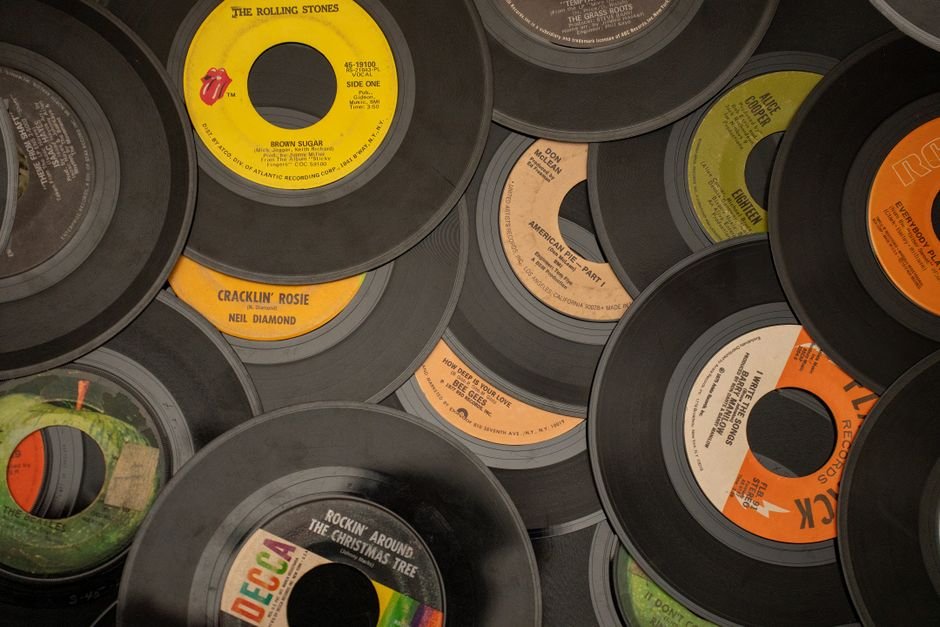
If you think today’s music industry has problems — opaque streaming royalties, predatory label deals, algorithmic gatekeeping — let me take you back to a time when the music business wasn’t just shady, it was operationally indistinguishable from organized crime. The story of Roulette Records, the New York-based label founded in 1956 and helmed by Morris Levy, is not a cautionary tale tucked away in music history footnotes. It is the origin story of exploitation in the record business, and every independent artist alive in 2026 should know it by heart.
Morris Levy and the Birth of Roulette Records
Morris Levy didn’t come from music. He came from the streets of the Bronx, and by the time he launched Roulette Records, he had already spent years running Birdland, one of New York’s most famous jazz clubs, through a web of connections that extended directly into the Genovese crime family. Levy was, by multiple accounts and eventual FBI documentation, an associate of the mob — a relationship that didn’t stay outside the office door when he signed artists to Roulette.
The label itself became a masterclass in institutionalized theft. Artists were signed to contracts so one-sided that they effectively handed over creative output in exchange for little more than the promise of exposure. Royalty statements were falsified or simply never delivered. Publishing rights were seized through coercion. In many documented cases, songwriting credits were reassigned without consent — a practice so common at Roulette that artists often discovered they no longer owned their own songs after the fact. This wasn’t accidental negligence. It was a system, deliberately engineered to extract maximum value from artists while returning as little as legally — and sometimes illegally — possible.
Buddy Holly’s publishing, for instance, became entangled in dealings connected to Levy. Tommy James and the Shondells, who recorded some of their biggest hits for Roulette, famously described the experience in James’s memoir as being ‘locked in a room with the devil.’ James has said publicly that he never received meaningful royalties from records that sold millions of copies. When he once pushed back, the response was less a business negotiation and more an implied physical threat. That’s not a music contract dispute. That’s racketeering.
The Structural Blueprint: How Mob Logic Shaped Label Deals
What makes the Roulette Records story so important — and so chillingly relevant — isn’t just the crime. It’s the structure. The way Levy ran Roulette became a template that, in softened and legally sanitized forms, persisted throughout the music industry for decades. Understanding the blueprint helps you recognize its echoes.
Control Through Contracts
The foundational tool of mob-style music industry exploitation was the contract. Roulette’s deals were deliberately incomprehensible — pages of legal language designed not to clarify terms but to obscure them. Artists, many of whom were young, Black, working-class, and without legal representation, signed documents that granted labels rights in perpetuity, across all formats and territories, for a fraction of a percentage in royalties — if those royalties were ever accurately calculated at all.
Staggeringly, the basic architecture of those deals didn’t fully die with Levy. Through the 1980s and 1990s, major label contracts routinely included clauses for ‘packaging deductions,’ ‘reserve accounts,’ and ‘breakage fees’ — holdovers from the vinyl era that had no real-world justification in a digital economy but continued to suppress artist earnings. Prince didn’t write ‘slave’ on his face in 1993 for nothing. The Roulette model had gone corporate, but it hadn’t gone away.
Publishing as the Primary Weapon
If contracts were the foundation, publishing was the weapon of mass destruction. Roulette, like many labels of its era, ran affiliated publishing companies that artists were pressured — or outright forced — to assign their compositions to. Once your publishing was gone, the label collected performance royalties, mechanical royalties, and sync fees that should have been yours, often indefinitely. The artist might receive a small advance and then watch their song generate income for decades without seeing another cent.
This is why, in 2026, publishing ownership remains the single most critical financial asset a songwriter controls. The battles fought by artists like Taylor Swift — publicly re-recording her masters after Scooter Braun’s acquisition of Big Machine Records — or the ongoing advocacy work of organizations like the Artist Rights Alliance are direct descendants of the fight that artists signed to labels like Roulette never got to have. They didn’t have social media. They didn’t have direct-to-fan platforms. They had a phone call that sometimes carried a threat.
Payola, Radio, and the Rigged Ecosystem
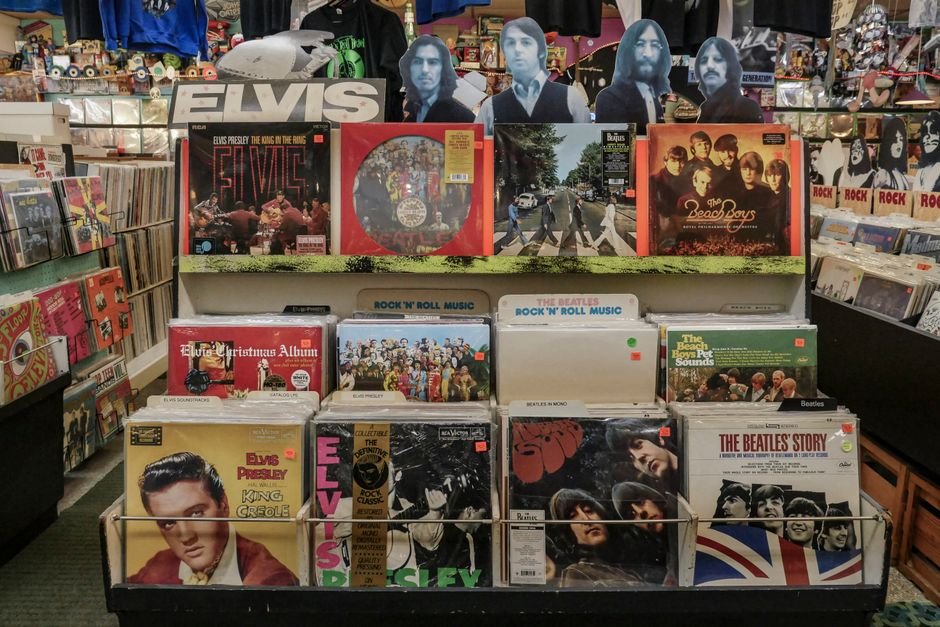
Roulette’s operation didn’t exist in a vacuum. The label functioned within — and actively helped perpetuate — a broader ecosystem of corruption that touched radio, distribution, and retail. Payola, the illegal practice of paying radio stations to play specific records without disclosing the payment, was rampant throughout the 1950s and 1960s and was deeply embedded in how labels like Roulette competed for airplay.
When the U.S. Congress held payola hearings in 1959 and 1960, the music industry scrambled to distance itself from the most visible offenders. But the underlying logic of the system — pay to play, control the gatekeepers, manufacture demand rather than respond to it — didn’t evaporate. It evolved. Independent promotion companies emerged as a legal buffer, hired by labels to ‘independently’ advocate for radio spins. The payments moved off the books. The result stayed the same.
For independent artists in 2026, the ghost of payola lives in playlist pitching culture on Spotify, Apple Music, and Amazon Music. The platforms have editorial playlists controlled by curators whose decision-making processes remain largely opaque. Third-party playlist promotion services — some legitimate, many exploitative — have filled the gap, charging artists hundreds or thousands of dollars for playlist placements that may or may not deliver real listeners. The names have changed. The dynamic hasn’t changed as much as we’d like to think.
I’ve spoken with artists who’ve spent upward of two thousand dollars on playlist promotion campaigns and gained nothing but bot streams. The Roulette era at least had the decency to dress its corruption in a sharp suit and make it personal. Today’s exploitation is algorithmic and anonymous, which almost makes it worse.
What Independent Artists Can Learn From This Dark History
Here’s where I want to get practical, because the point of excavating this history isn’t to make you feel hopeless — it’s to make you dangerous in the best possible sense. Armed with this knowledge, today’s independent artists have tools and choices that the musicians who walked into Roulette Records simply did not have.
First, own your masters. Platforms like DistroKid, TuneCore, and CD Baby allow artists to distribute music globally while retaining full ownership of their recordings. There is no legitimate reason in 2026 for an independent artist to sign away master ownership to a label unless the deal comes with a genuinely transformative advance, marketing commitment, and a clearly defined reversion clause. If a label can’t articulate what they bring beyond distribution, walk away.
Second, own your publishing. Register with a Performing Rights Organization — ASCAP, BMI, or SESAC in the United States, PRS in the UK, SOCAN in Canada — immediately. Consider working with a publishing administrator like Songtrust or CD Baby Pro to collect mechanical royalties globally. Do not assign your publishing to any party — label, manager, or producer — without independent legal counsel and a defined term with reversion rights. Not a conversation to skip.
Third, build your direct-to-fan infrastructure now, not later. Platforms like Bandcamp, Patreon, and Substack give artists a revenue relationship with their audience that no label or streaming platform can revoke. Collect email addresses. Build a list. The artists who survived the Roulette era with any financial dignity were those who had enough name recognition to eventually tour independently. Today, your email list is your tour. Your Patreon is your merchandise table. Guard it accordingly.
Fourth — and this one is non-negotiable — get a music attorney before you sign anything. Not a friend who went to law school. Not a manager who ‘knows about contracts.’ An entertainment lawyer who represents artists, not labels, and who has reviewed recording contracts, publishing deals, or management agreements in the last twelve months. The cost of a legal review is always less than the cost of a bad deal. Morris Levy’s artists learned that lesson too late and too painfully.
The story of Roulette Records is ultimately a story about power — who holds it, how it gets maintained, and what happens to creative people who enter a system without understanding the rules that actually govern it. The music industry of 2026 is not the music industry of 1961. The legal landscape is more navigable, the tools for independence are genuinely powerful, and the information available to artists is incomparably better than what existed when Tommy James was signing contracts he couldn’t understand.
But the instinct to extract — to take the maximum from creators while returning the minimum — doesn’t die easily. It adapts. It finds new contracts, new platforms, new language. The best thing any artist can do is study the history, understand the architecture of exploitation, and build their career in ways that make that architecture irrelevant. Morris Levy is gone. The lessons he left behind, for better and for worse, absolutely are not.