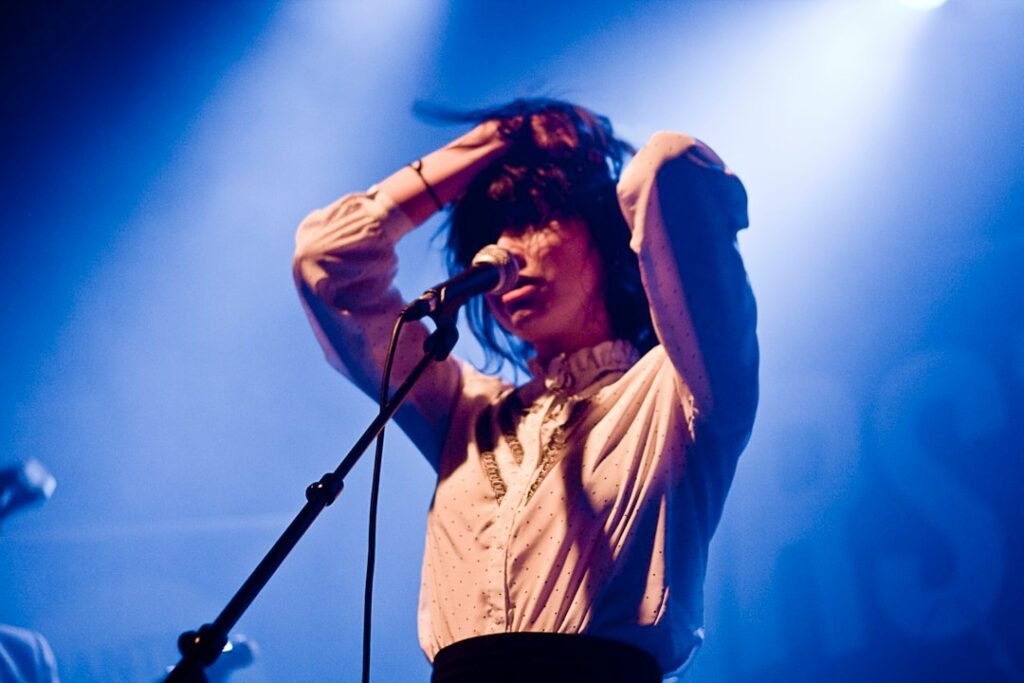
There are moments in music that stop you mid-scroll and make you genuinely want to stand up and cheer. The news that rising British pop star Reigns is launching her own record label — and teasing a headline European tour to go with it — is absolutely one of those moments. As someone who has spent years watching artists get chewed up by legacy label structures, watching a young British talent decide to build her own infrastructure before the majors can define her narrative is nothing short of electrifying. This is not just a music story. This is a business story, an empowerment story, and frankly, a blueprint story for every independent artist watching from the wings.
The Raye Effect: How One Artist Changed the Rules for an Entire Generation
If you want to understand why what Reigns is doing matters so profoundly, you need to understand what Raye did — and what it cost her to do it. Raye spent years signed to Polydor Records, consistently delivering commercially viable music, only to find herself stifled creatively, with her debut album repeatedly delayed. In 2021, she took to Twitter and publicly demanded her release from the label. The music industry gasped. And then something remarkable happened: the industry applauded.
Raye released My 21st Century Blues independently in 2023, self-funding and self-directing the entire project. It became one of the most critically celebrated British albums in years. At the 2024 BRIT Awards, she swept the room, winning six awards in a single night — a record. The message to the industry was seismic: you do not need a major label to win. You need vision, you need ownership, and you need the courage to bet on yourself.
That is exactly the energy Reigns is channelling in 2026. And the fact that she is doing it proactively — building her label structure before a major deal can complicate things — suggests she has done her homework. This is not a reaction. This is a strategy.
Why Launching Your Own Label Before You Break Is the Smart Play
Here is what most rising artists do not understand until it is too late: the moment a major label shows genuine interest, the clock starts ticking on your leverage. Labels are sophisticated negotiating entities. They know that an artist who has not yet tasted significant revenue is often willing to sign away publishing rights, master ownership, and creative control in exchange for an advance that feels enormous but is really just a loan against future earnings.
By establishing her own label now, Reigns retains her masters from day one. Every track she releases is an appreciating asset she owns outright. She controls her sync licensing, her merchandise tie-ins, her brand partnerships. If a major label wants in later, they come as a distribution partner or a licensing partner — not as an owner. That is a fundamentally different conversation, and it is one Reigns will have from a position of extraordinary strength.
Tools like DistroKid, TuneCore, and Amuse make digital distribution accessible to any self-releasing artist today, but running a proper label — with legal infrastructure, brand identity, roster potential, and long-term strategic intent — is a different level of commitment. It signals that Reigns is not just thinking about her next single. She is thinking about her next decade.
The European Tour Announcement: Why Live Music Remains the Cornerstone of Artist Monetization
Alongside the label news, Reigns has been teasing what sources describe as a significant European tour — multiple markets, proper venues, the kind of itinerary that transforms an artist from a streaming presence into a cultural moment. And in 2026, that distinction matters more than ever.
Streaming revenue, for all its democratising power, remains stubbornly difficult to monetise at the emerging-artist level. Spotify’s per-stream rates hover around $0.003 to $0.005. Even a song with a million streams generates somewhere between three and five thousand dollars — before distributor fees, before splits with collaborators, before any recoupable costs. The mathematics are brutal for anyone below the superstar tier.
Live music is where the economics shift. A sold-out 1,000-capacity venue at £25 a ticket generates £25,000 in a single night. Multiply that across fifteen European dates, add merchandise revenue — which industry insiders typically peg at an additional 20 to 30 percent of ticket revenue for a well-merchandised pop artist — and suddenly you are looking at a tour that can generate several hundred thousand pounds while simultaneously building the kind of emotional fan connection that no playlist placement can replicate.
Fan Engagement as a Revenue Engine — The Strategic Logic Behind Touring Early
There is a school of thought in the music business that says artists should wait until they have a hit before they tour seriously. I have always believed the opposite, and Reigns appears to agree. Touring before you are massive means the fans who show up are the truest believers — the ones who discovered you in the algorithm’s margins, who followed you from a viral TikTok clip or a late-night BBC Radio 1 session. Those fans become community anchors. They bring friends to the next tour. They buy the vinyl. They convert.
Platforms like Bandcamp, which remains a vital tool for artist-direct revenue, allow artists to build pre-order relationships with exactly these core fans. Patreon and similar membership platforms let artists monetise that deep engagement year-round, not just around release cycles. If Reigns is building a label, she is almost certainly thinking about how to integrate these fan engagement revenue streams into a coherent business model — not just a series of disconnected income events.
European markets, it is worth noting, have historically been incredibly receptive to British pop artists who tour authentically and early. Germany, the Netherlands, Scandinavia, France — these markets reward investment. Artists who show up, play the rooms, do the press, and build grassroots followings can sustain careers in Europe that buffer them against the volatility of the UK charts. Reigns teasing a European tour is not just an exciting announcement for fans. It is a smart geographical diversification play.
What Reigns’ Label Launch Means for the Wider Independent Artist Community
Every time a visible artist makes a bold structural move toward independence, it sends a signal that ripples through the entire ecosystem. When Raye did it, thousands of artists on social media began asking questions about their own contracts, their own rights, their own leverage. Managers, entertainment lawyers, and music business educators reported surges in enquiries. The Raye moment was not just hers — it became a teaching moment for an entire generation of emerging British artists.
Reigns launching her own label in 2026 arrives in a music landscape that is structurally more hospitable to independence than it has ever been. SoundExchange, ASCAP, and their UK equivalents like PRS for Music and PPL have streamlined royalty collection for independent rights holders. Legal tools like JKBX and other music rights platforms are making fractional rights investment and management more accessible. AI-assisted mixing tools, affordable studio plugins from companies like iZotope and Waves, and remote collaboration platforms like Splice mean that the production infrastructure a label once provided can now be assembled by a savvy independent artist for a fraction of the historical cost.
The label, in 2026, is not primarily a production or distribution vehicle. It is a brand architecture. It is a statement of intent. It is a legal entity that protects creative assets and creates optionality — the ability to bring in partners, sign other artists, attract investment, or negotiate from strength. When Reigns launches her label, she is not imitating the old music industry. She is building a new version of it, one where the artist sits at the centre of every financial and creative decision.
The Road Ahead: Can Reigns Translate Momentum Into Lasting Industry Impact?
The critical question, as it always is with rising artists making bold structural moves, is whether the music can sustain the narrative. Raye succeeded not just because she left her label, but because My 21st Century Blues was genuinely extraordinary — a raw, genre-fluid record that demanded to be heard. Reigns will need her creative output to match the ambition of her business architecture.
From everything that has emerged about her sound and aesthetic, there is reason for genuine optimism. British pop in 2026 is in a fascinating transitional moment — post-hyperpop, navigating a renewed appetite for songwriting craft and emotional directness, the kind of space where a confident, self-possessed artist with something real to say can genuinely break through. Reigns appears to understand the moment she is in, and more importantly, she appears to be building the infrastructure to capitalise on it sustainably.
I will be watching this story closely, and I genuinely believe that in twelve months, we will look back at this label launch and this European tour announcement as the origin point of something significant. Not just for Reigns — but for the broader conversation about what it means to be a self-determining British artist in the streaming era. The playbook is being written in real time, and right now, Reigns is holding the pen.
Follow Bannds for ongoing coverage of Reigns, independent artist strategy, and the business of modern music. Subscribe to our newsletter for the latest artist monetisation insights delivered directly to your inbox.