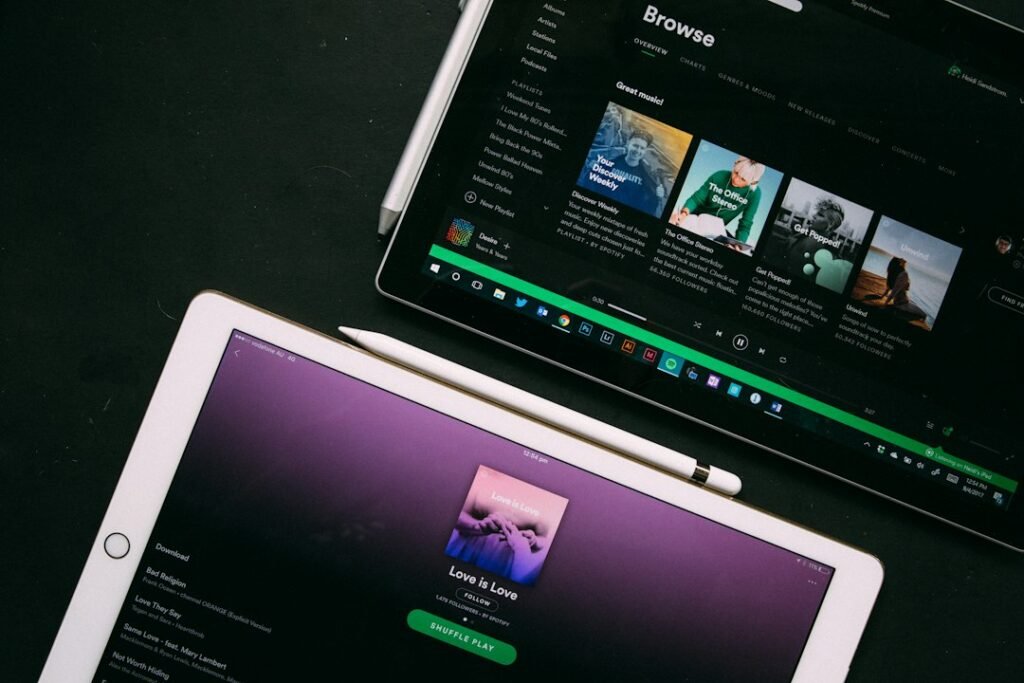
If you want to understand the music business in 2026, you have to understand the streaming economy — its scale, its contradictions, and most importantly, its implications for the artists living inside it. The numbers coming out of platforms like Spotify, Apple Music, Amazon Music, Tidal, and YouTube Music this year are staggering in scope but sobering in detail. As someone who has spent years embedded in the independent music world, talking to artists, managers, and label executives, I can tell you that these statistics are not just data points — they are the terrain on which careers are built or broken.
The Global Streaming Landscape in 2026
The global music streaming market has crossed a valuation of $34 billion in 2026, up from approximately $26 billion just three years ago. That is not a modest climb — that is a seismic shift in how recorded music generates revenue worldwide. According to data highlighted by Exploding Topics, the number of paid music streaming subscribers globally has now surpassed 800 million, a figure that would have seemed impossible to the industry executives who watched Napster detonate the CD market back in 2001.
Spotify continues to dominate the global market with a commanding share of roughly 31% of all paid subscribers, hovering around 252 million paid users as of early 2026. Apple Music holds the second spot with an estimated 110 million subscribers, followed by Amazon Music at approximately 100 million. Tidal, despite its comparatively smaller subscriber base, has carved out a credible niche among audiophiles and artist-advocacy communities thanks to its higher royalty payouts and lossless audio offerings. YouTube Music, backed by Google’s algorithmic muscle, continues to grow aggressively in emerging markets across Southeast Asia, Latin America, and Sub-Saharan Africa.
What strikes me most about these numbers is not the dominance of any single platform — it is the sheer geographic breadth of streaming adoption. India alone added over 40 million new streaming subscribers in the last 18 months. Nigeria, Brazil, and Indonesia are posting growth rates that are embarrassing the mature Western markets by comparison. For independent artists willing to think globally, this represents a genuinely historic opportunity.
What the Revenue Numbers Actually Mean for Artists
Here is where the story gets complicated — and where I feel obligated to be honest with you, because the headline numbers can be deeply misleading. Yes, the streaming market is worth $34 billion. Yes, 800 million people are paying for music subscriptions. But the royalty rate conversation remains one of the most contentious and unresolved battles in the modern music business.
In 2026, Spotify’s effective per-stream payout rate hovers between $0.003 and $0.005, depending on the listener’s country, subscription tier, and how Spotify’s weighted pool model distributes royalties in a given month. That means an independent artist needs roughly 250,000 streams to earn $1,000 before distributor fees and any splits with collaborators. For most artists releasing music without the marketing budget of a major label, that number is brutally hard to hit consistently.
Apple Music remains the gold standard for per-stream payouts among the major platforms, reportedly averaging around $0.01 per stream — roughly double Spotify’s rate. Tidal’s royalty structure, especially through its HiFi tier, continues to pay above-average rates, and the platform has been vocal about artist compensation as a core part of its brand identity. Distributors like DistroKid, TuneCore, CD Baby, and Amuse remain the primary conduits through which independent artists access these platforms, each with their own fee structures and royalty reporting timelines that artists need to scrutinize carefully.
The Emerging Role of Direct Licensing and Artist-Owned Distribution
One of the most exciting developments I have tracked closely in 2026 is the growing movement toward direct licensing and artist-owned distribution infrastructure. Platforms like Stem and United Masters have been aggressively courting independent artists with deals that offer higher royalty retention in exchange for data sharing and promotional commitments. Meanwhile, some artists with established fan bases — think the model pioneered by artists like Macklemore or Amanda Palmer — are bypassing traditional streaming economics entirely for certain releases, leaning into Bandcamp (which has seen a meaningful revival under new independent ownership), Patreon-exclusive releases, and direct download campaigns.
The artists winning in 2026 are the ones who treat streaming as a discovery and audience-building tool rather than a primary revenue engine. Streaming gets fans in the door. Merchandise, sync licensing, live performance, fan clubs, and direct-to-fan digital products are where sustainable income actually lives.
Platform Features and the Battle for Artist Loyalty
Beyond raw subscriber numbers and royalty rates, the competitive differentiation between platforms in 2026 is increasingly about the tools and features they offer to artists directly. Spotify for Artists has continued to evolve its dashboard, giving independent musicians detailed streaming analytics, playlist pitch access, and audience demographic breakdowns that were simply unavailable to artists outside major label relationships just a decade ago. The platform’s Marquee and Showcase promotional products have become staple tools in any serious independent artist’s release strategy, though the pay-to-play nature of those tools remains a point of frustration for artists operating on shoestring budgets.
Apple Music for Artists has similarly expanded its analytics suite, and the platform’s editorial team has developed a reputation for championing genuinely independent voices through curated editorial playlists — a meaningful distinction from algorithmic playlist placement. Amazon Music’s Artist Central portal, while still lagging behind Spotify and Apple in terms of feature depth, benefits enormously from its integration with Alexa and Amazon’s broader commerce ecosystem, creating fascinating possibilities for artists who want to sell merchandise or tickets directly to listeners.
Algorithm Culture and Playlist Placement in 2026
Let us talk about the algorithmic elephant in the room. In 2026, Spotify’s Discover Weekly, Release Radar, and the various personalized radio features remain the most powerful organic discovery mechanisms available to independent artists — but the algorithm has become significantly more competitive as the platform’s catalog has ballooned past 120 million tracks. Getting algorithmic traction now requires not just strong music but strategic release cadence, listener engagement signals, playlist saves, and profile completion metrics that many artists still overlook.
Smart independent artists are working with playlist pitching services, music PR firms like Muddy Paw PR or Cyber PR, and specialist digital marketing agencies to build the kind of streaming velocity that triggers algorithmic amplification. Third-party playlist placement, once a relatively straightforward growth hack, has become a more scrutinized practice after Spotify’s crackdown on artificial streaming and low-quality playlist networks. The artists who are cutting through in 2026 are doing so with authentic fan engagement — saving tracks, sharing playlists, following artist profiles — signals that the algorithm genuinely values.
What Independent Artists Should Do With These Stats Right Now
I want to close with something practical, because data without action is just noise. The music streaming services stats of 2026 tell a clear story: the audience has never been larger, the tools have never been more accessible, and the competition for attention has never been more intense. Here is what I would tell any independent artist sitting across from me at a coffee shop today.
First, diversify your platform presence but master one. Distribute everywhere — Spotify, Apple Music, Amazon Music, Tidal, YouTube Music, Deezer, and all regional platforms through your distributor of choice — but focus your growth energy on the platform where your specific audience actually lives. Use your analytics to find out where your listeners are coming from and double down there.
Second, do not let streaming be your only revenue line. Use platforms like Bandcamp for direct sales, Patreon or Substack for fan subscriptions, and tools like Laylo or Community for direct-to-fan text and email list building. Your streaming numbers build credibility. Your direct fan relationships build financial resilience.
Third, treat sync licensing as a serious pursuit. With the explosion of content on streaming video platforms, podcasts, social media, and brand campaigns, the sync market in 2026 is genuinely accessible to independent artists through licensing platforms like Musicbed, Artlist, Songtradr, and direct pitching to music supervisors. A single well-placed sync can outperform months of streaming royalties.
The streaming economy is not going to become more artist-friendly on its own. But artists who understand the numbers, build smart release strategies, cultivate genuine fan relationships, and diversify their revenue streams are not just surviving the streaming era — they are building sustainable, independent careers in it. The stats of 2026 are not a ceiling. For the right artist with the right strategy, they are a launchpad.