Let me be direct with you: what is happening in Australia right now is not just a policy debate for politicians and lawyers to sort out in some Canberra committee room. The Albanese government’s proposed AI copyright framework — which would allow AI companies to train on copyrighted creative works without licensing or compensation — is an existential threat to every songwriter, producer, independent artist, and band trying to build a sustainable career in music. And when I say 90% of the music industry is blasting it, I mean exactly that. Labels, collecting societies, independent distributors, streaming advocates, and the artists themselves have come together in a rare and thunderous coalition of opposition. That kind of unity doesn’t happen by accident. It happens when the stakes are this high.
What Albanese’s AI Plan Actually Proposes — And Why It’s Dangerous
The core of the Australian government’s proposal is a so-called ‘text and data mining’ exception to copyright law. On the surface, it sounds like bureaucratic jargon. In practice, it would give AI companies — think the developers behind tools like Suno, Udio, and the next wave of generative music platforms — legal cover to scrape, ingest, and train on copyrighted music without paying a cent to the people who made it. No license. No opt-in. No compensation. Just a blanket exemption that treats a decade of an artist’s life work as free training data for billion-dollar tech corporations.
I’ve spoken to independent artists across Australia and the broader Asia-Pacific region who are genuinely terrified. And these aren’t paranoid technophobes. These are people who’ve spent years building their catalogs on platforms like Spotify, Apple Music, and Bandcamp — creators who understand streaming economics better than most industry analysts because they live inside the margins every single day. They know what it means when revenue gets squeezed. They’ve survived the transition from physical sales to digital. They’ve adapted to the playlist era, the algorithm economy, the short-form video explosion on TikTok and Instagram Reels. But this? This feels different. Because this doesn’t just squeeze the margin. It potentially eliminates the foundational value of their creative output altogether.
The Opt-Out Illusion
One of the most infuriating aspects of the proposal — and a point that industry bodies like the Australasian Performing Right Association (APRA AMCOS) have hammered relentlessly — is the suggested ‘opt-out’ mechanism. The government has floated the idea that rights holders could opt out of having their work used for AI training. Sounds reasonable until you actually think about it. An opt-out system places the entire burden of protection on the creator, not the company profiting from the data. It requires every independent artist — many of whom are already stretched impossibly thin managing their own marketing, booking, social media, and distribution — to actively monitor, register objections, and navigate a legal and technical landscape designed by and for large corporations. It’s not a solution. It’s a trap dressed up in the language of fairness.
Compare this to how we handle other forms of licensing in music. When a brand wants to use your song in a commercial, they come to you — or your publisher — and they negotiate. When a film wants to sync your track, they pay for that right. The creative work has value, and the law reflects that value. Why should AI training be treated differently? The answer, of course, is that it shouldn’t. The only reason it’s being framed as an exception is because AI companies have lobbied hard for it, and governments around the world are still catching up to the speed of the technology.
The Music Industry Unites: Who Is Pushing Back and How
The breadth of the opposition to Albanese’s plan is genuinely remarkable. APRA AMCOS, which represents over 120,000 music creators in Australia and New Zealand, has been among the loudest voices, calling the proposal ‘deeply harmful’ and warning that it would undermine the entire licensing ecosystem that supports professional music-making in Australia. The Australian Recording Industry Association (ARIA) has submitted formal objections. Independent labels operating under the Australian Independent Record Labels Association (AIR) have added their voices. Even major label arms — Universal Music Australia, Sony Music Australia, Warner Music Australia — which don’t often align with independent sector concerns, are standing shoulder to shoulder on this one.
Internationally, the ripple effects are being felt immediately. The global music community watches Australian policy closely because Australia has historically been a bellwether for copyright reform in the Asia-Pacific region. If Canberra passes this exemption, you can bet that similar proposals will gain momentum in Singapore, Japan, South Korea, and potentially even influence debates in the European Union and United Kingdom. The Recording Industry Association of America (RIAA) has already flagged concern, and organizations like the International Federation of the Phonographic Industry (IFPI) are watching intently.
What Artists on the Ground Are Saying
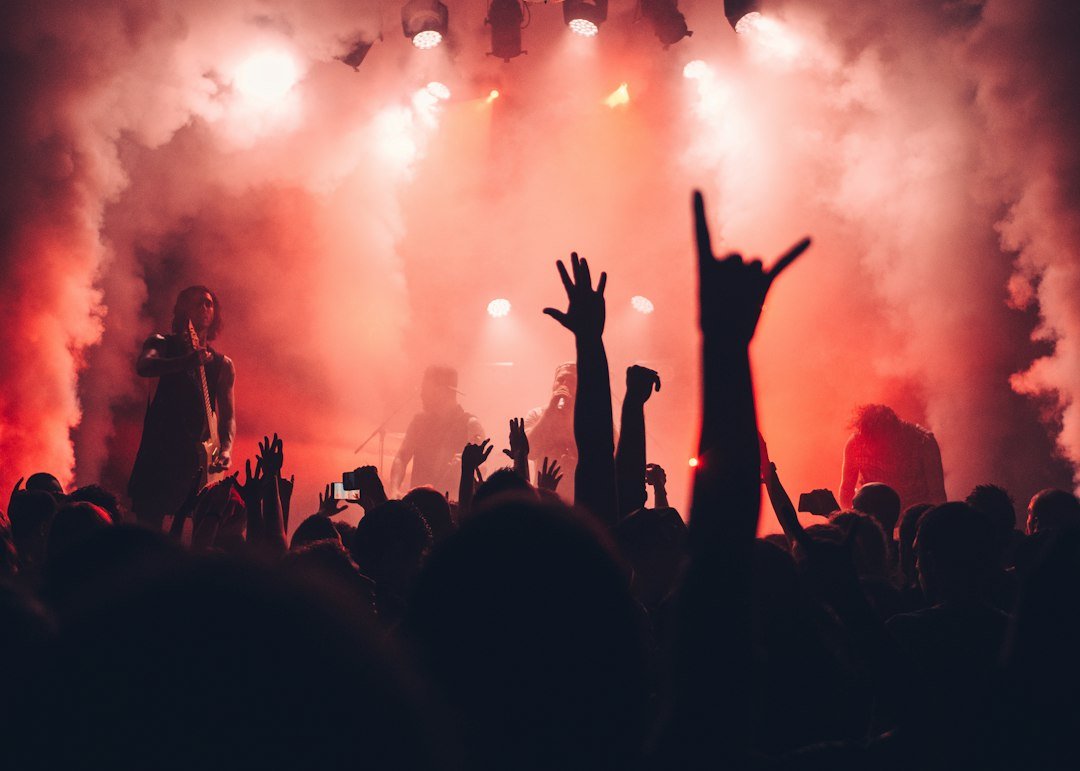
Beyond the institutional statements and formal submissions, the artist-level response has been raw and personal. Australian artists like Montaigne, G Flip, and a wave of emerging independent acts have taken to social media to express their fury. The conversation on platforms like Instagram and Threads has been electric — full of the kind of passionate, informed anger that only comes from people whose livelihoods are directly on the line. I’ve seen producers who use tools like Ableton Live and Logic Pro to craft original work expressing genuine fear that the music they’ve spent years perfecting could be used to train AI systems that will then compete directly with them on the same streaming platforms where they earn their living.
And here’s the cruel irony that keeps coming up in these conversations: independent artists already operate in one of the most financially precarious environments in any creative industry. Spotify pays an average of somewhere between $0.003 and $0.005 per stream. Most indie artists rely on a combination of streaming revenue, merchandise sales, live performances, sync licensing, and direct fan support through platforms like Patreon, Bandcamp, and Bandsintown’s artist tools to piece together a sustainable income. Sync licensing — placing music in TV, film, ads, and games — is one of the most reliable and lucrative income streams available to independent creators. If AI companies can legally ingest your catalog and generate music that sounds like you without paying you, that licensing market collapses. Not gradually. Fast.
The Monetization Crisis This Would Create
Let’s talk about the money, because that’s ultimately what this comes down to. The global music industry generated an estimated $28 billion in recorded music revenue in 2025, with streaming accounting for the dominant share. A significant portion of that revenue depends on the enforceability of copyright — the legal guarantee that when someone uses your creative work commercially, you get paid. Collecting societies like APRA AMCOS, SOCAN in Canada, PRS for Music in the UK, and ASCAP and BMI in the US exist entirely because copyright is enforceable. They collect, distribute, and protect royalty income on behalf of millions of creators. An AI training exemption doesn’t just threaten one revenue stream. It threatens the philosophical foundation on which all these systems are built.
For independent artists trying to monetize their music in 2026, the tools available have never been more sophisticated. DistroKid, TuneCore, CD Baby, and Amuse have democratized global distribution. Platforms like Hypeddit and Feature.fm have made direct-to-fan marketing accessible at every budget level. Stem and Beatdapp are helping artists understand and audit their streaming data with unprecedented transparency. But all of these tools — all of this infrastructure — sits on top of the assumption that the music has value and that value is protected by law. Undermine that protection, and the entire ecosystem becomes unstable.
What Needs to Happen Now — And What You Can Do
The good news — and yes, there is some — is that this fight is not over. Australia’s government is still in a consultation phase, which means that industry submissions, public pressure, and coordinated advocacy genuinely matter right now. APRA AMCOS has set up resources for creators to submit their own comments and make their voices heard directly to policymakers. ARIA is coordinating with international partners to ensure Australian voices are amplified in global forums. If you’re an artist, manager, publisher, or music industry professional anywhere in the world, now is the time to pay attention and add your voice.
What I’d urge every independent artist reading this to do right now: register your works properly with your relevant collecting society. Understand your rights. Stay connected to industry news through publications like this one, follow the advocacy work of organizations like the Future of Music Coalition, and engage with your local music industry associations. The decisions being made in Canberra in 2026 will shape the global precedent for how AI companies interact with creative copyright for the next decade. This is not hyperbole. This is the moment.
The music industry came together with 90% unified opposition because the threat is real and the stakes are enormous. When artists, labels, publishers, distributors, and collecting societies all agree on something, the rest of the world should listen. Albanese’s AI plan, as currently proposed, is bad for music, bad for creators, and bad for the cultural ecosystem that makes Australian — and global — music worth anything at all. We’re not against AI. We’re against theft dressed up as innovation. There’s a meaningful difference, and it’s time Canberra understood that.