Let me be direct with you: what is happening to musicians in the UK right now is not some distant, theoretical tech debate. It is an existential crisis unfolding in real time, affecting the session guitarist who played on your favourite album, the songwriter who poured three years into crafting a number-one hit, and the independent artist grinding to build a sustainable career on Spotify and Bandcamp. Artificial intelligence has arrived in the music industry not with a polite knock, but with a battering ram — and in 2026, UK musicians are no longer whispering their concerns. They are shouting them.
The Scale of the Problem: What UK Musicians Are Actually Facing
The alarm bells started ringing loudly when the UK government began consulting on potential copyright law changes that could allow AI companies to train their models on copyrighted music without explicit consent or compensation. For artists who have spent decades building catalogues, developing signature sounds, and negotiating hard-won licensing deals, this proposal is nothing short of a betrayal. Over 1,000 UK artists — including Damon Albarn, Annie Lennox, Kate Bush, and hundreds of independent musicians — signed an open letter calling the proposed changes catastrophic. And they are right to be furious.
The concern is not merely philosophical. Tools like Suno, Udio, and a growing number of lesser-known AI music generators can now produce studio-quality tracks in seconds, mimicking specific genres, moods, and even stylistic signatures of real artists. Advertising agencies that once hired session musicians for jingle work are now experimenting with AI-generated beds. Sync licensing — one of the most reliable income streams for independent artists — is under direct threat as film and TV producers explore AI alternatives that cost a fraction of a proper licence fee.
Session Musicians: The Invisible Victims
Nobody talks enough about session musicians in these conversations, and that frustrates me deeply. These are the professionals who make records sound like records — the string players, the percussionists, the backing vocalists who give songs their soul. The Musicians’ Union in the UK has reported growing anxiety among its membership, with session work declining measurably as producers turn to AI tools for quick, cheap solutions. When a producer can generate a convincing string arrangement using an AI plugin in ten minutes instead of booking a 24-piece orchestra, the economic math is brutal and immediate.
Songwriters Caught in the Copyright Crossfire
Songwriters face a different but equally devastating threat. If AI companies are permitted to train on existing musical works without licensing those works, then every chord progression, every melodic hook, every lyrical structure that a songwriter has developed over a career becomes free raw material for a machine. The Ivors Academy, which represents professional songwriters and composers in the UK, has been vocal about the need for robust opt-in frameworks rather than opt-out schemes. The distinction matters enormously: an opt-out system places the burden on individual artists to protect their own work, which is practically impossible for independent musicians without legal resources.
The Streaming Royalties Dimension: A Problem AI Is Making Worse
Here is where things get even more complicated, and where I want every independent artist reading this on Bannds to pay close attention. The streaming royalty model was already broken before AI entered the picture. On Spotify, the average per-stream rate hovers around $0.003 to $0.005. An independent artist needs millions of streams just to earn a living wage. Now, AI-generated tracks are flooding streaming platforms, artificially inflating stream counts and diluting the royalty pool that human artists draw from.
In early 2026, Spotify, Apple Music, and Deezer have all implemented varying degrees of AI-generated content disclosure requirements, but enforcement remains inconsistent and frankly inadequate. Thousands of AI-generated tracks — many uploaded under fake artist names through distribution platforms like DistroKid and TuneCore — continue to siphon royalties from the pool. Universal Music Group, Sony Music, and Warner Music Group have all filed or supported legal action against AI music generators, but independent artists without major label backing have little recourse and even less leverage.
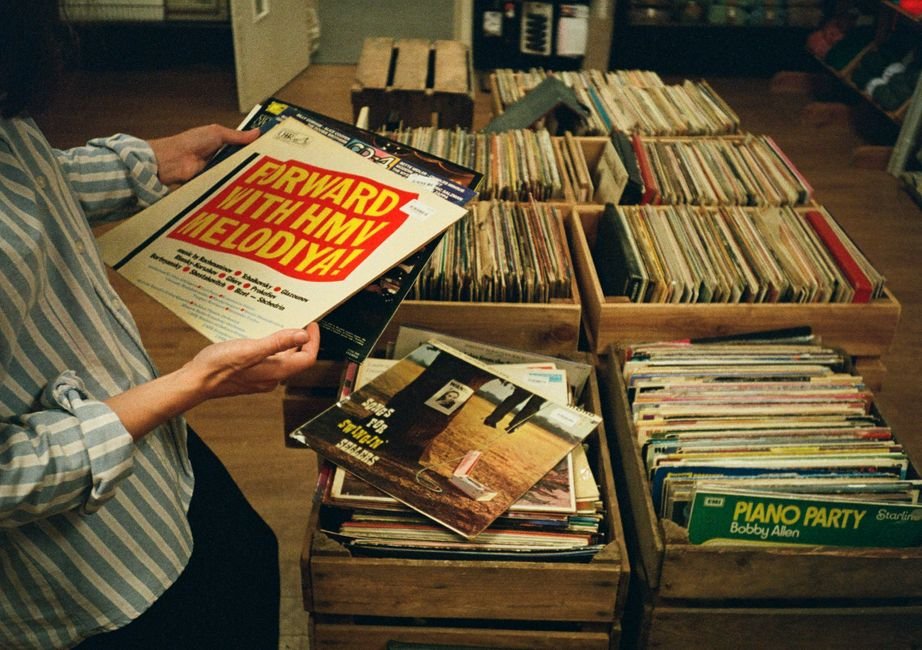
The vinyl revival that has brought warmth and community back to music consumption — those beautiful record shops full of physical artefacts that fans genuinely treasure — represents something that AI simply cannot replicate: the human story behind the music. And yet, even that market is not immune. AI-generated album artwork, AI-written liner notes, and algorithmically produced music marketed as authentic human expression are all emerging threats to the integrity of the physical music market.
What the Music Industry Must Do Right Now
I am not anti-technology. I have watched artists use Amper Music, LANDR, and even early versions of generative AI tools to enhance their creative process, and there is genuine value in AI as a tool rather than a replacement. The distinction the music industry must fight to establish — loudly, politically, and legally — is between AI as a creative assistant and AI as a unlicensed, uncompensated substitute for human artistry.
Here is what needs to happen, and what artists and industry stakeholders should be demanding in 2026:
Mandatory licensing frameworks for AI training data. Any AI company that wants to train its model on copyrighted music must negotiate and pay for that right, full stop. This is not a radical position — it is the basic principle of copyright law applied consistently. The UK government must resist pressure from tech lobbies and protect the creative economy, which contributes billions of pounds annually and employs hundreds of thousands of people.
Transparent AI disclosure on streaming platforms. Spotify, Apple Music, and every other platform must implement clear, enforceable labelling of AI-generated content and separate royalty pools so that human-created music is not competing for the same pie as machine-generated content. This is both a fairness issue and a consumer transparency issue.
Collective bargaining through unions and guilds. The Musicians’ Union, the Ivors Academy, and PRS for Music need to be at every table where AI policy is being discussed. Independent artists need to support these organisations with membership and engagement — collective voice is the most powerful tool musicians have against well-resourced technology companies.
How Independent Artists Can Protect Themselves Today
While the policy battles play out in Westminster and Brussels, independent artists cannot afford to wait passively. There are concrete steps you can take right now to protect your income and your creative identity.
Register everything, immediately. Make sure every track you release is registered with PRS for Music and MCPS if you are in the UK. Register your publishing with a reputable publisher or self-publish through organisations like Songtrust or Sentric Music. Your registration is your paper trail and your first line of defence.
Diversify your revenue beyond streaming. The artists who are weathering this storm best are those who have built multiple income streams: direct-to-fan platforms like Bandcamp and Patreon, merchandise, live performance, sync licensing through boutique agencies like Musicbed or Artlist, and educational content on platforms like Skillshare or their own websites. AI cannot replicate the relationship between an artist and their fans — lean into that relentlessly.
Build your community as an asset. Fan engagement is your moat. Artists like Imogen Heap have built direct relationships with their audiences that no algorithm or AI generator can displace. Use platforms like Discord, Substack, and even old-fashioned email lists to build a community that is invested in you as a human being with a story, not just a content generator. That human connection is literally irreplaceable.
Get vocal and get political. Write to your MP. Sign every petition put forward by the Musicians’ Union and the Ivors Academy. Share the stories of how AI is affecting your income directly. Politicians respond to constituent pressure, and the creative industries vote. Make noise — it is, after all, what musicians do best.
The UK music industry generates over £6 billion annually and is the envy of the world. British artists — from the Beatles to Adele to Little Simz to whatever brilliant independent act is breaking through on Bandcamp right now — have shaped global culture in ways that AI-generated content simply cannot match. But none of that heritage protects future artists if we allow the legal and economic foundations of the creative economy to be hollowed out by unchecked technological disruption.
The musicians raising their voices in 2026 are not Luddites afraid of change. They are professionals fighting for the right to be compensated fairly for their life’s work. That is not too much to ask. And as someone who has spent a career in this industry, I am telling you: if we do not fight for it now, we will lose it. The future of music must be made by humans, for humans — and every artist, fan, label, and platform has a role to play in making sure it stays that way.