Let me be honest with you: when I first dug into the latest music streaming market forecast data — recently highlighted by The National Law Review — my reaction was equal parts excitement and righteous frustration. Excitement because the numbers are staggering. Frustration because, if history is any guide, the artists who actually create all this value will once again be the last in line to collect it. But here is what I know for certain in 2026: the landscape is shifting in ways that independent artists and bands cannot afford to ignore. The streaming economy is not just growing — it is restructuring. And the artists who understand that restructuring will be the ones who thrive through 2030 and beyond.
The Raw Numbers: A Market Expanding at Breathtaking Speed
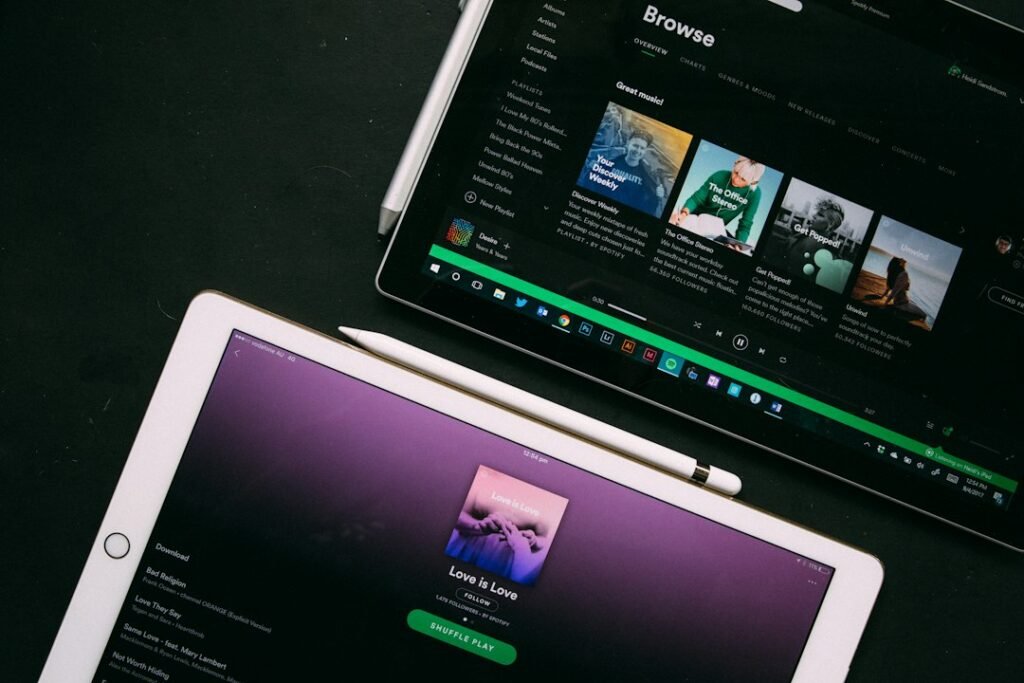
The global music streaming market, valued at roughly $34 billion as we move through 2026, is projected to surpass $100 billion by 2030. That is not a typo. Analysts are pointing to a compound annual growth rate (CAGR) hovering between 14 and 17 percent depending on the research firm, with the most bullish projections coming from markets in Southeast Asia, Sub-Saharan Africa, and Latin America where smartphone penetration is still accelerating rapidly. Spotify currently commands the largest subscriber base — well over 700 million monthly active users at this point — but platforms like Apple Music, Amazon Music, YouTube Music, Tidal, and regional powerhouses like Boomplay and JioSaavn are all fighting aggressively for territory.
What is driving this growth? Several forces are converging simultaneously. Broadband internet access continues to expand globally. The cost of mobile data has plummeted in emerging markets. AI-powered recommendation engines are getting genuinely good at surfacing music that listeners actually connect with, which increases session time and reduces churn. And the post-pandemic generation of listeners — the ones who grew up entirely in a streaming-first world — are now entering peak earning years and are willing to pay for premium subscriptions. All of this adds up to a market that is not approaching saturation anytime soon.
Subscription vs. Ad-Supported: Where the Real Money Is Moving
One of the most significant trends in the current forecast data is the accelerating shift from ad-supported free tiers toward paid subscriptions. As recently as 2023, ad-supported listening accounted for a substantial chunk of total streams. By 2026, premium subscription revenue has pulled dramatically ahead, and forecasters expect that gap to widen through 2030. For independent artists, this matters enormously because premium streams generate meaningfully higher per-stream royalty rates than ad-supported plays. Platforms like Tidal and Apple Music, which have historically skewed toward paid subscribers, have quietly become more valuable royalty ecosystems per play than the free-tier-heavy alternatives. If you are an artist releasing music right now and your distributor analytics are not breaking down your premium versus free-tier stream counts, you need to demand that data immediately.
The Geographic Shift: Emerging Markets Are the New Frontier
Here is something the mainstream music press does not talk about nearly enough: the next hundred million streaming subscribers are not coming from North America or Western Europe. They are coming from Nigeria, Indonesia, Brazil, India, and the Philippines. Spotify has made aggressive moves into these territories, but so have local platforms with deeper cultural roots and more nuanced licensing structures. For independent artists with even modest appeal in these markets — particularly those making Afrobeats, Latin urban, K-influenced pop, or regional folk-fusion — the opportunity is genuinely historic. Tools like DistroKid, TuneCore, and CD Baby ensure your music is technically present in these markets, but presence alone is not strategy. Artists need to be thinking about playlist pitching, local press, and fan community building in these regions right now, before the competition intensifies further.
What This Forecast Means for Independent Artists: The Honest Assessment
I want to take a moment here to separate signal from noise, because not all of this growth will flow to artists equally — and pretending otherwise would be irresponsible. The uncomfortable truth is that streaming platforms have historically structured their royalty models in ways that concentrate payments toward the highest-volume artists and labels. The pro-rata payment model, which distributes royalties based on total share of streams rather than paying artists directly per listen from their fans, has drawn sustained criticism from independent artist advocates including groups like the Union of Musicians and Allied Workers. Some platforms, notably Tidal and SoundCloud via its fan-powered royalties system, have experimented with user-centric payment models that could significantly benefit niche and mid-tier artists. As the market grows toward that $100 billion figure, the pressure on major platforms to reform their royalty structures is going to intensify, and I believe we will see meaningful policy shifts before 2030.
But artists cannot afford to wait for systemic reform. The smart move — and what I consistently see working for the independent bands and solo acts who are actually building sustainable careers right now — is to treat streaming as a discovery engine rather than a primary revenue source. Streaming gets people in the door. Your Bandcamp page, your Patreon, your merchandise store, your live shows, your sync licensing deals — that is where the real artist income lives. Platforms like Bandcamp allow artists to sell directly to fans at margins that streaming cannot touch. A single $15 album sale on Bandcamp generates more artist revenue than several thousand streams on most major platforms. That math should be informing every release strategy you build.
AI, Personalization, and the Algorithmic Opportunity
The role of artificial intelligence in streaming growth cannot be overstated, and for independent artists, it represents both a genuine opportunity and a serious threat. On the opportunity side: AI-driven playlist curation on Spotify, Apple Music, and Amazon Music has democratized discovery in ways that were unimaginable ten years ago. An independent artist with no label backing, no radio promotion budget, and no publicist can still land on Discover Weekly or a personalized Apple Music station and reach tens of thousands of new listeners overnight. I have seen this happen for artists on my own radar — bands like Wednesday and Militarie Gun who built enormous streaming audiences primarily through algorithmic discovery before their major press moments arrived.
But the threat is equally real. AI-generated music — churned out at industrial scale by companies leveraging tools built on the backs of human musicians — is already crowding streaming catalogs and, in some cases, capturing algorithmic placement that should belong to human artists. Spotify has already had to purge millions of AI-generated tracks from its platform, and regulators in the European Union and the United States are actively debating how to classify and compensate for AI music creation. This is not an abstract future concern. It is happening now, in 2026, and the forecast data through 2030 needs to be read with this variable firmly in view. The market may grow to $100 billion, but if a growing percentage of that market is being captured by machine-generated content, the effective opportunity for human artists could be smaller than the headline numbers suggest.
Strategies for Artists and Bands to Capture Value Through 2030
So what should working musicians, independent bands, and artist managers actually do with this information? Here is my honest, practitioner-level read on the strategies that will separate the artists who thrive from those who simply tread water as the market expands.
First, diversify your distribution and revenue stack aggressively. Do not rely on a single distributor or platform. Use DistroKid or TuneCore for broad digital distribution, but maintain a Bandcamp presence for direct sales and a Patreon or Substack for superfan monetization. Artists like Pomplamoose and Amanda Palmer have built genuinely sustainable careers by owning their fan relationships rather than outsourcing them to platform algorithms.
Second, prioritize playlist pitching and editorial relationships on Spotify for Artists and Apple Music for Artists. These free tools give you direct access to pitch unreleased music to editorial curators, and a single editorial playlist placement can change the trajectory of a release. If you are not using these dashboards actively before every release, you are leaving real money on the table.
Third, invest in your sync licensing pipeline. The music supervision market for television, film, gaming, and advertising is expanding alongside streaming, and sync fees represent one of the most artist-favorable revenue streams in the entire music business. Platforms like Musicbed, Artlist, and Musicbed connect independent artists directly with music supervisors. A single sync placement can generate thousands of dollars in upfront fees plus backend royalties — income that compounds over years.
Fourth, build internationally and do it intentionally. Identify the emerging markets where your genre has cultural resonance and begin building relationships there — through local playlist pitching services, international press, and social media content tailored to those audiences. The artists who plant those seeds in 2026 will be harvesting them when the Southeast Asian and African streaming markets hit their peak growth phase between 2027 and 2030.
The music streaming market forecast to 2030 is, at its core, a story about scale. The platform is getting bigger. The audience is getting broader. The technology is getting more sophisticated. Whether that growth translates into genuine prosperity for the human artists who make music worth streaming — that is the question we all have to keep pushing, loudly and with data in hand, until the answer is yes.